

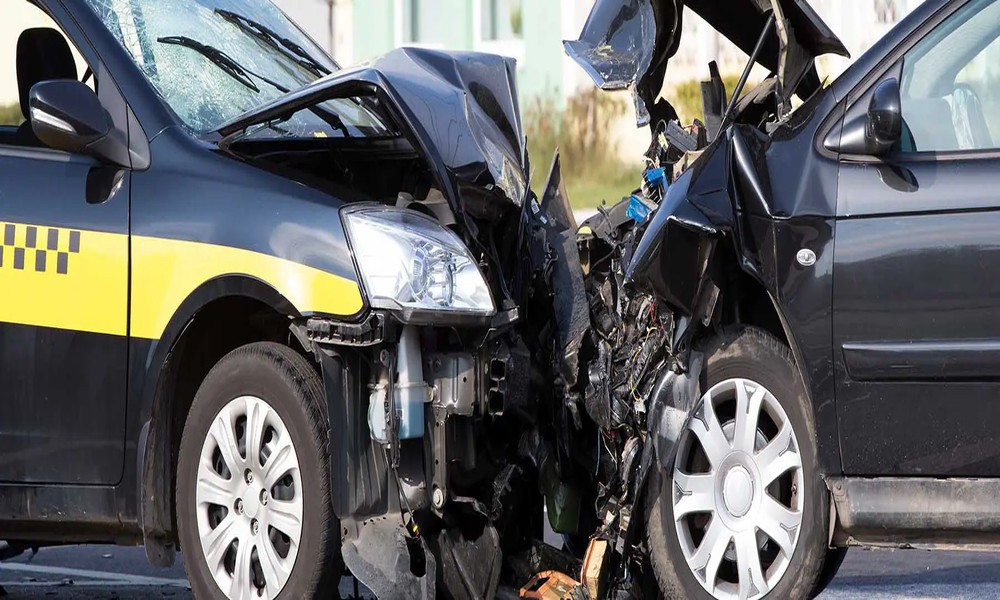
Multi-vehicle collisions in Arizona create complex fault allocation questions that require careful analysis of each driver’s contribution to the sequence of events. Arizona’s pure comparative fault system permits a plaintiff to name multiple defendants and recover against each in proportion to their assigned fault percentage.
A plaintiff who is partially at fault can still recover from each defendant in proportion to that defendant’s assigned fault. This makes evidence development around each defendant’s specific conduct particularly important.
How the Sequence of Events Determines Fault in Chain Reaction Crashes
In a chain reaction rear-end collision, fault allocation requires reconstructing which driver initiated the collision sequence and whether each subsequent driver had adequate time and distance to stop. The first driver in the sequence may bear the greatest fault, but each driver who failed to maintain adequate following distance can be assigned a portion of comparative fault.
Arizona courts analyze the principle of superseding cause in multi-vehicle crashes, asking whether an independent act of negligence by a subsequent driver so substantially contributed to harm that it breaks the causal chain from the original negligent driver.
Why Every Defendant in a Multi-Vehicle Case Requires Separate Analysis
Each defendant in a multi-vehicle collision has separate insurance coverage, a potentially separate theory of negligence, and a distinct financial capacity to contribute to a settlement. A skilled personal injury attorney in Glendale AZ conducts multi-defendant analysis systematically to ensure that no contributing party is overlooked and that each defendant’s proportional obligation to compensate the injured plaintiff is fully established.
How Joint and Several Liability Works in Arizona
Arizona eliminated joint and several liability for most civil defendants in 1987. Under current Arizona law, each defendant is responsible only for their proportional share of damages. A defendant found 20 percent at fault pays 20 percent of damages, not the entire amount if other defendants are judgment-proof.
How Insurance Coverage Stacks in Multi-Vehicle Crashes
Each defendant in a multi-vehicle crash has their own liability insurance policy with its own per-person and per-incident limits. When the plaintiff’s damages exceed any single defendant’s policy limits, pursuing the remaining defendants’ separate policies provides access to additional recovery pools.
Multi-vehicle crash cases in Arizona require more complex fault analysis, more thorough evidence gathering, and more strategic demand planning than two-vehicle collisions. The combination of Arizona’s proportional liability rules, individual defendant insurance structures, and the need to preserve UIM rights creates a legal puzzle that benefits significantly from experienced coordination.
