

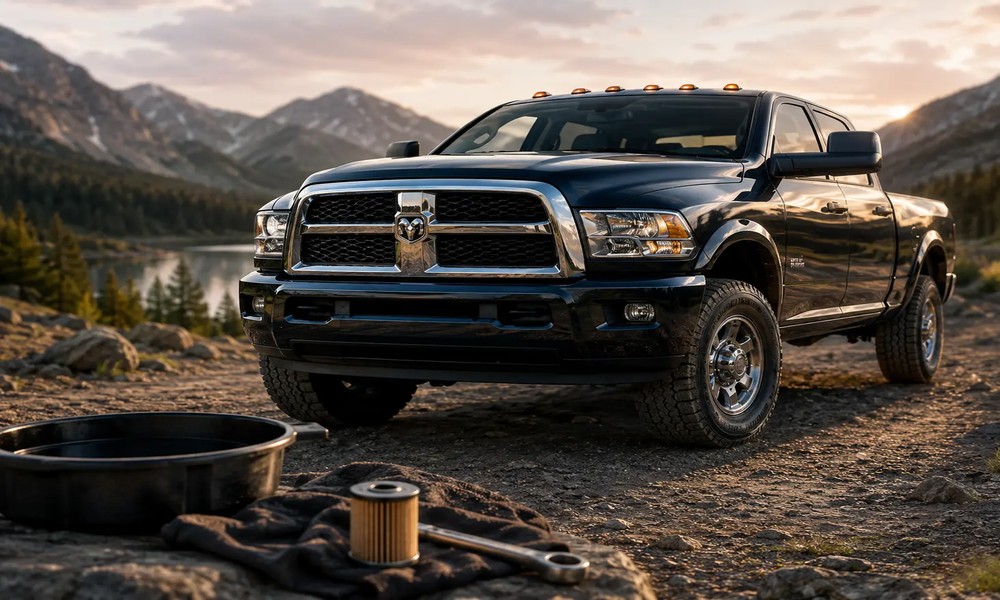
Diesel pickup trucks have earned a devoted following for good reason. The Cummins-powered Ram, the Duramax-equipped Silverado and Sierra, and the Power Stroke-equipped F-Series have become legendary for their torque output, towing capacity, and – when properly maintained – their ability to rack up extraordinary mileage before requiring major mechanical work. Six-figure odometer readings are not impressive for a diesel pickup. Seven-figure readings are what the enthusiast community holds up as the real benchmark.
But that legendary longevity does not happen automatically. Diesel engines are more mechanically complex than their gasoline counterparts, and they reward attentive maintenance with exceptional longevity while penalizing neglect with repair bills that can be genuinely shocking. If you own or are considering a diesel pickup – whether a half-ton diesel, a three-quarter-ton workhorse, or a one-ton dually – here is what you need to understand to get the most out of it over the long haul.
Diesel Engines Are Not Just Bigger Gasoline Engines
The most important mindset shift for anyone new to diesel ownership is understanding that diesel engines operate on fundamentally different principles than gasoline engines. There is no spark plug firing a pre-mixed air-fuel charge. Instead, diesel fuel is injected directly into highly compressed air, and the heat of that compression ignites the fuel spontaneously. This combustion process – and the extreme cylinder pressures it generates – is why diesel engines produce so much torque, and it is also why the fuel and lubrication systems that support them must be maintained to tighter standards.
A few key differences that directly affect how you maintain a diesel pickup:
- Higher compression ratios – diesel engines typically compress air at ratios between 14:1 and 23:1, compared to 8:1 to 12:1 in gasoline engines; this creates more internal stress on every component, particularly bearings and head gaskets
- Soot accumulation in oil – diesel combustion produces more soot than gasoline combustion, and that soot ends up in the engine oil, degrading its protective qualities faster
- Fuel system precision – modern common rail diesel injection systems operate at pressures exceeding 30,000 PSI with injector tolerances measured in microns; contaminated or water-laden fuel causes injector damage that is expensive to diagnose and repair
- Emissions aftertreatment complexity – post-2007 diesel pickups are equipped with diesel particulate filters (DPFs) and, on newer models, selective catalytic reduction (SCR) systems that add maintenance requirements not present on older diesels or gasoline trucks
Understanding these differences sets the right expectations for what diesel ownership requires – and why the payoff in longevity and performance is so significant when maintenance is done correctly.
The Oil and Filter Interval Is Not Negotiable
Of all the maintenance items on a diesel pickup, none is more critical – or more frequently abused – than the oil change interval. Diesel engines work their oil hard. Operating at higher temperatures, higher pressures, and with more combustion byproduct accumulation than gasoline engines, diesel oil degrades faster and needs to be replaced on a strict schedule.
The specific interval depends on your engine, the oil specification you use, and how you drive. A diesel pickup used primarily for light-duty commuting accumulates more soot and acids relative to miles driven than one used for sustained highway towing, because short-trip driving does not allow the oil to fully heat up and burn off moisture. Most OEM recommendations for modern diesel pickups fall in the 7,500-10,000 mile range for conventional oil, with some synthetic-capable engines allowing longer intervals under ideal conditions.
What to watch for between changes:
- Oil level drops – a diesel that is consuming oil between changes has a problem worth investigating; acceptable oil consumption is typically less than one quart per 3,000 miles
- Milky or foamy oil on the dipstick – this indicates coolant contamination, almost always from a failing head gasket, EGR cooler, or cracked cylinder head; this is a stop-driving-immediately situation
- Unusually dark or gritty oil well before the change interval – may indicate excessive blowby from worn piston rings or that the engine is running excessively rich
- Oil filter condition – always replace the oil filter with every oil change; a diesel that has gone too long between changes sometimes has bypass valve damage in the filter housing that requires attention
The Fuel System: Where Diesel Reliability Is Won or Lost
Ask any diesel mechanic what single component failure causes the most expensive repairs in modern diesel pickups, and the answer is almost universally the fuel injection system. Common rail diesel systems deliver fuel with extraordinary precision – and they are correspondingly intolerant of fuel quality problems, contamination, and missed filter maintenance.
The fuel filter is arguably the most important service item on a diesel pickup after the oil change, and it is one that many owners neglect because there is no obvious symptom until performance begins to degrade. A restricted fuel filter starves the high-pressure fuel pump of supply, causing it to work harder and wear faster. In some GM Duramax applications with the CP4.2 injection pump – a unit notorious for catastrophic failure that contaminates the entire fuel system – maintaining proper fuel filter intervals is not just a performance matter, it is a $10,000+ repair avoidance strategy.
The fuel system is also vulnerable to water contamination and, in certain climates and storage situations, microbial growth. Diesel fuel left in a tank for extended periods or stored in conditions with large temperature swings can develop water contamination from condensation that damages injector tips and nozzle seats in ways that accumulate invisibly over thousands of miles. For a thorough understanding of how common rail diesel injection systems fail, how to diagnose symptoms early, and what makes some repairs preventable and others unavoidable, Heavy Duty Journal’s common rail diesel troubleshooting guide is one of the most detailed free resources available – written for commercial truck operators but directly applicable to diesel pickup owners dealing with the same injection technology.
Practical fuel system habits for diesel pickup owners:
- Replace the fuel filter at or before the OEM-specified interval – for most diesel pickups, this is every 15,000-25,000 miles, though harder-working trucks benefit from shorter intervals
- Drain the water separator regularly – most diesel pickups have a manual drain valve on the fuel filter housing; make draining it a part of every oil change routine
- Use fuel additives in cold climates – diesel gels at low temperatures, and anti-gel additives are cheap insurance against fuel flow problems in winter
- Be selective about fuel sources – high-volume truck stops with fast fuel turnover generally have fresher diesel than smaller stations with low volume; old, degraded diesel is a fuel system problem waiting to happen
The DPF and Aftertreatment System: Modern Diesel’s Most Misunderstood Requirement
Diesel pickup trucks built after 2007 are equipped with a diesel particulate filter that traps soot from the exhaust stream. This filter must periodically clean itself through a process called regeneration – either passively during highway driving when exhaust temperatures are naturally high, or actively when the engine management system initiates a high-temperature burn cycle to clear accumulated soot.
The DPF is where many diesel pickup owners run into trouble, particularly those who use their trucks primarily for short-distance, low-load driving. City driving, short commutes, and extended idling all work against the regeneration process. When soot loads build up faster than passive regeneration can clear them, the truck initiates active regeneration more frequently – and if active regeneration is interrupted repeatedly (by turning the engine off during the cycle), soot loads can reach the point where a forced regeneration at a shop is required, followed eventually by physical DPF cleaning or replacement.
Signs that your DPF or aftertreatment system needs attention:
- Frequent active regeneration cycles – the truck going into regen more than once per tank of fuel suggests a driving cycle problem or an underlying engine issue causing excessive soot output
- Reduced power with a warning light – most diesel pickups enter a derate mode when DPF backpressure exceeds thresholds, limiting power until the system is serviced
- Increased fuel consumption – a partially blocked DPF raises exhaust backpressure, which forces the engine to work harder and burn more fuel for the same output
- White or blue smoke during active regen – normal regen produces some heat shimmer but not visible smoke; smoke during regen can indicate oil contamination of the DPF
The best long-term DPF strategy for a diesel pickup used primarily in city driving is occasional highway runs at sustained load – an hour or more at highway speed gives passive regeneration the conditions it needs to clear accumulated soot naturally.
Cooling System Maintenance: Overlooked Until It Fails
Diesel engines generate significant heat and rely on a healthy cooling system to maintain operating temperatures within the precise range where combustion efficiency and component longevity are optimized. Cooling system neglect is one of the most common causes of expensive diesel repairs – not because the coolant fails dramatically, but because it degrades gradually, losing its corrosion-inhibiting properties and allowing internal engine corrosion to develop over years of service.
Key cooling system maintenance items for diesel pickups:
- Coolant flush interval – most diesel pickup manufacturers recommend flushing and replacing coolant every 5 years or 100,000-150,000 miles; extended-life coolants offer longer intervals but still require testing
- Coolant concentration – a 50/50 mix of coolant and distilled water is the typical specification; both over- and under-concentration reduce freeze and boil-over protection
- EGR cooler condition – the EGR cooler routes exhaust gases through a coolant-cooled heat exchanger before recirculation; a failing EGR cooler can introduce exhaust gases into the coolant or coolant into the exhaust, both of which cause serious secondary damage
- Thermostat function – a diesel operating below its design temperature runs rich, accumulates more soot in the oil, and puts more unburned fuel into the crankcase; a stuck-open thermostat is not just inefficient, it accelerates wear
Understanding the Real Cost of Diesel Ownership
Diesel pickups cost more to purchase than comparable gasoline models, and they cost more to service when something goes wrong. A diesel injector replacement, a high-pressure fuel pump, or an EGR cooler job on a three-quarter-ton pickup can easily run $2,000-$8,000 in parts and labor. A catastrophic fuel system failure – the kind caused by a failed CP4 pump in certain GM diesels – can exceed $15,000 to $20,000 to repair correctly.
These numbers are not meant to discourage diesel ownership. They are meant to make the case for why preventive maintenance on a diesel pickup is not optional – it is the strategy that makes the total cost of ownership work in your favor. A diesel pickup that is properly maintained will typically outlast two or three gasoline trucks, deliver better fuel economy under load, and retain higher resale value. The math works when the maintenance is disciplined.
For diesel pickup owners who want a realistic picture of what repairs cost at independent shops versus dealerships, and what different service tiers actually include, Heavy Duty Journal’s truck repair cost guide breaks down labor rates, parts pricing, and the overhead realities behind shop invoices – context that helps truck owners evaluate quotes and make better decisions about where and when to get work done.
The Long Game
The diesel pickups that become legends – the ones with 400,000 or 500,000 miles on the original engine – got there because someone made a commitment to maintenance discipline from the very first oil change. The engines themselves are capable of extraordinary longevity. The question is always whether the owner gives them what they need to get there.
Change the oil on schedule. Keep the fuel filters fresh. Understand what your DPF needs and give it the operating conditions to do its job. Watch the cooling system. And when something does need repair, get it done before it becomes the kind of cascading failure that turns a $400 fix into a $4,000 one. That discipline – applied consistently over the life of the truck – is what separates the 500,000-mile diesel from the one that needed an engine at 150,000.
About the Author: This article was contributed by the editorial team at Heavy Duty Journal, a free digital trade publication delivering expert diesel maintenance, fleet management, and commercial trucking knowledge to technicians and owner-operators across North America.
