

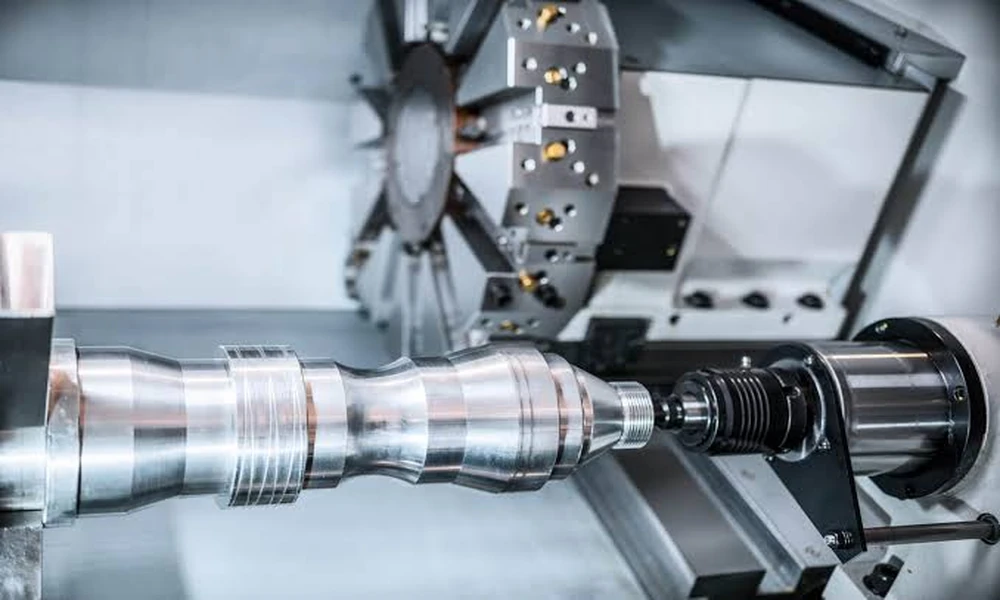
A conveyor carrying small electronics housings can present black plastic on one batch and bright aluminum on the next. If the station simply needs to know whether a housing has arrived, a beam across the conveyor can make that decision without relying on light reflected from the housing. The harder question is what actually interrupts the beam. A carrier, an opening in the housing or a moving locating finger can change what the controller sees.
Find a reliable feature to cross
Check where the smallest housing crosses the sensing line at both extremes of its position in the carrier. The beam should cross a solid feature on the part and remain clear when only the carrier passes. Aim through a hollow connector opening and the same part can produce a brief clear signal. Aim too low and the carrier can interrupt the beam even when the part is missing.
Bring an empty carrier, the smallest housing and any version with an open sidewall to the trial. Check how vibration, a guide rail adjustment or a shifted bracket changes the signal. A through-beam pair depends on sufficient interruption of the received light. A transparent cover may pass enough light to remain undetected and needs a separate trial with the real material.
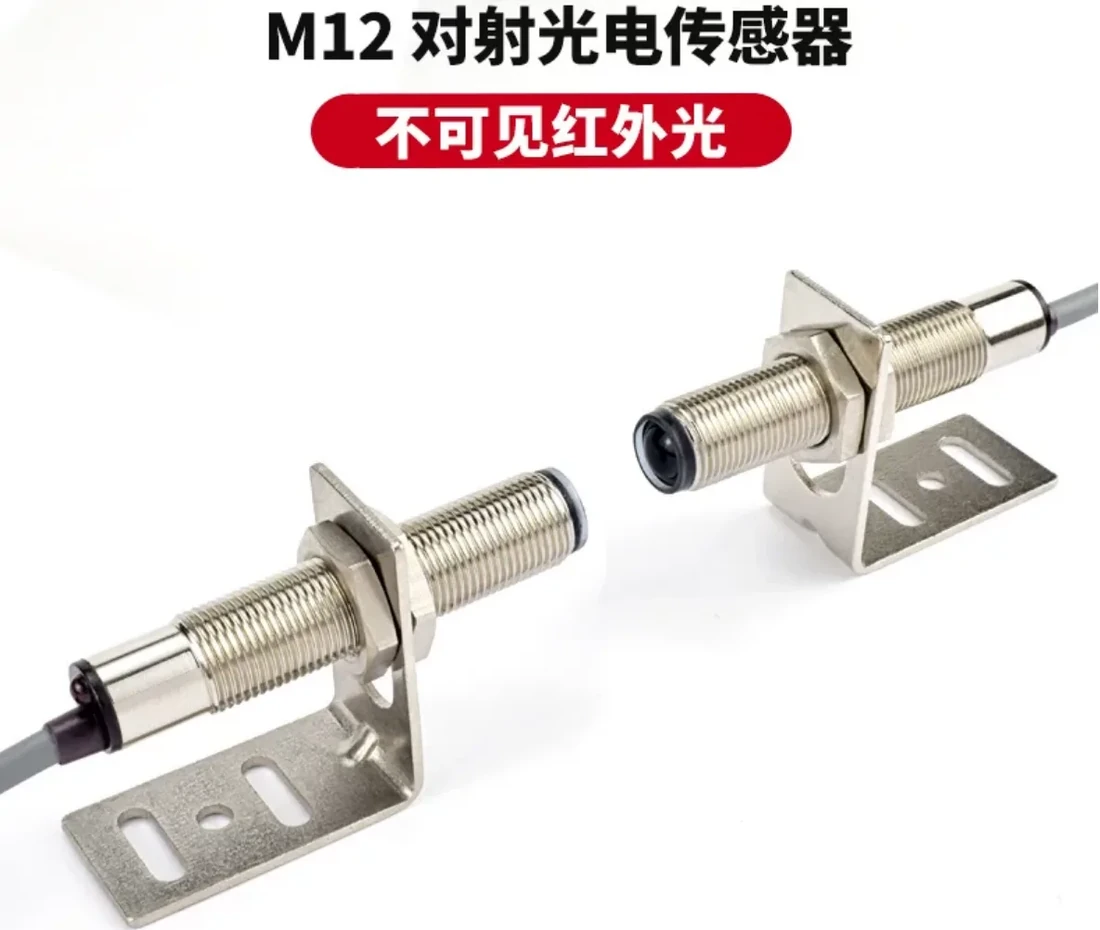
H-M M12 through-beam emitter and receiver with mounting brackets.
Check the mounts before choosing a barrel
Two opposed sensor heads need two mounting faces and room for both cables. An H-M M12 or M18 through-beam pair is one option for that arrangement. The model page lists both M12 and M18 housings in the 5 m class. Compare bracket holes, tool access and cable clearance before choosing between housings. Leave practical alignment margin within the published range of the selected pair.
For a one-sided station, look at the photoelectric sensor comparison by sensing mode. A reflector arrangement still needs a clear mounting point opposite the sensor. A diffuse sensor takes its return from the part itself. A background-suppression model may suit a part close to a machine wall, provided the actual target and background can be distinguished at the planned position.
Make the station check the correct event
A presence bit alone rarely tells the whole story. Decide when the controller should sample it. If the carrier stops at a known position, inspect that sample after the locating finger has moved out of the beam. If the carrier keeps moving, check whether the smallest valid interruption is long enough for the selected sensor and input settings. Keep the expected empty-carrier behavior in the station specification as well.
For a supplier enquiry, send the smallest feature that crosses the beam, the installed span, a sketch of both brackets and the input module’s exact part number. Select the receiver output to match that input and the intended signal logic. This is a part-detection application. Personnel access requires its own safeguarding design.
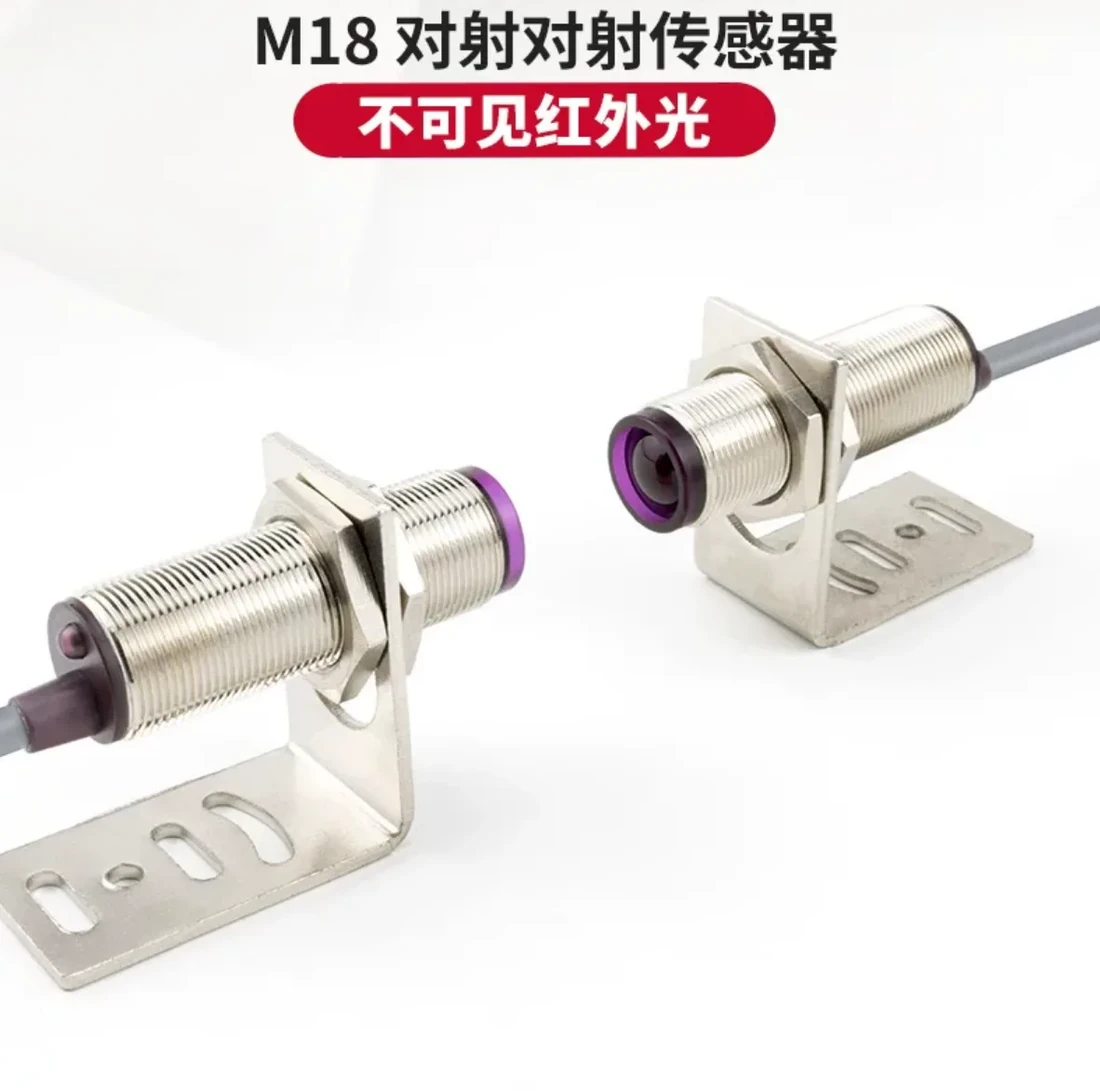
H-M M18 through-beam emitter and receiver with mounting brackets.
