

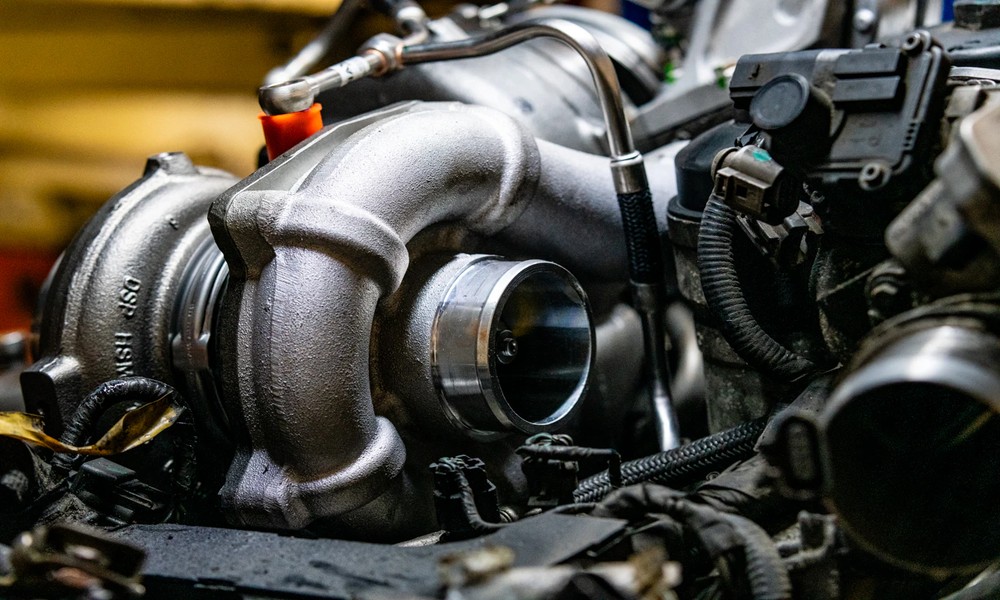
For owner-operators and fleet managers, the Cummins ISX is a workhorse known for its durability and torque. However, the turbocharger-the heart of the engine’s efficiency-is an incredibly sensitive component. While many technicians point to “wear and tear” or “foreign object damage” when a turbo fails, the silent killer is often oil contamination.
Because the turbocharger operates at extreme rotational speeds and temperatures, the lubricating oil isn’t just a lubricant; it is the only thing preventing the metal components from fusing together. When that oil becomes contaminated, the result is often a catastrophic failure that can lead to thousands of dollars in unplanned downtime.
The Mechanics of Turbo Lubrication
To understand why contamination is so deadly, you first have to understand the environment inside the turbo. The turbine wheel spins at tens of thousands of revolutions per minute. This creates a thin film of oil between the shaft and the bearings. This film is measured in microns; it is a microscopic barrier that prevents metal-on-metal contact.
When oil is pure, it flows smoothly and dissipates heat efficiently. However, when contaminants enter the oil stream, they disrupt this delicate balance in two primary ways: abrasive wear and chemical degradation.
Abrasive Contamination
Small particles-such as carbon deposits, metal shavings from other engine components, or dirt from poor filtration-act like liquid sandpaper. As the oil pumps through the turbo, these particulates are forced into the bearing clearances. Because the clearances are so tight, these particles scratch the bearing surfaces and the shaft. Once the surface is scored, the oil film can no longer maintain its integrity, leading to shaft instability and eventual seizure.
Chemical Contamination
Fuel dilution is one of the most common forms of chemical contamination in diesel engines. When raw diesel leaks into the oil pan-often due to faulty injectors or piston ring wear-it lowers the viscosity of the oil. Thinner oil cannot support the heavy load of the turbo shaft. This leads to “oil starvation” even if the oil level on the dipstick looks correct, as the oil is simply too thin to create a protective cushion.
Identifying the Warning Signs
A turbocharger rarely fails without warning, but those warnings are often ignored until the engine begins blowing blue smoke or loses significant power.
- Increased Oil Consumption: If you notice you are topping off your oil more frequently than usual, it may be a sign that the turbo seals are failing, allowing oil to leak into the intake or exhaust.
- Change in Oil Color or Consistency: Milky oil often indicates coolant contamination, while a strong scent of diesel in the oil indicates fuel dilution. Both are fatal to the bearings of a Cummins ISX Turbo.
- Excessive Whining or Screeching: A change in the “siren” sound of the turbo often indicates that the shaft is wobbling due to bearing wear caused by contaminated oil.
Preventing Turbo Failure: Practical Steps
Replacing a turbo is an expensive venture, but preventing the failure is relatively simple if you adhere to a strict maintenance regimen.
Prioritize High-Quality Filtration
The oil filter is your first line of defense. Using genuine or high-efficiency synthetic filters ensures that the smallest particulates are captured before they reach the turbo. Additionally, avoid mixing different brands of oil during top-offs, as different additive packages can sometimes react, leading to sludge formation.
Monitor Oil Intervals Strictly
Many operators extend their oil change intervals to save on operational costs. However, as oil ages, it breaks down and accumulates soot and acids. In a high-performance engine like the ISX, oxidized oil loses its ability to protect the turbo. Sticking to the manufacturer’s recommended intervals-or shortening them if you operate in extreme dusty or high-heat environments-is the most cost-effective insurance policy you can buy.
Address Fuel Leaks Immediately
If you suspect fuel dilution, do not wait for the next scheduled service. Fuel-diluted oil is an immediate threat to the turbocharger. Perform a professional oil analysis to check for the presence of fuel or coolant. A simple lab test can tell you exactly what is in your oil, allowing you to fix a leaking injector before it destroys the turbo.
The Bottom Line
The Cummins ISX is built for the long haul, but it is only as reliable as the fluid pumping through its veins. Oil contamination turns a precision instrument into a liability. By focusing on oil purity, utilizing quality filtration, and monitoring for fuel dilution, you can extend the life of your turbocharger and keep your truck on the road where it belongs.
